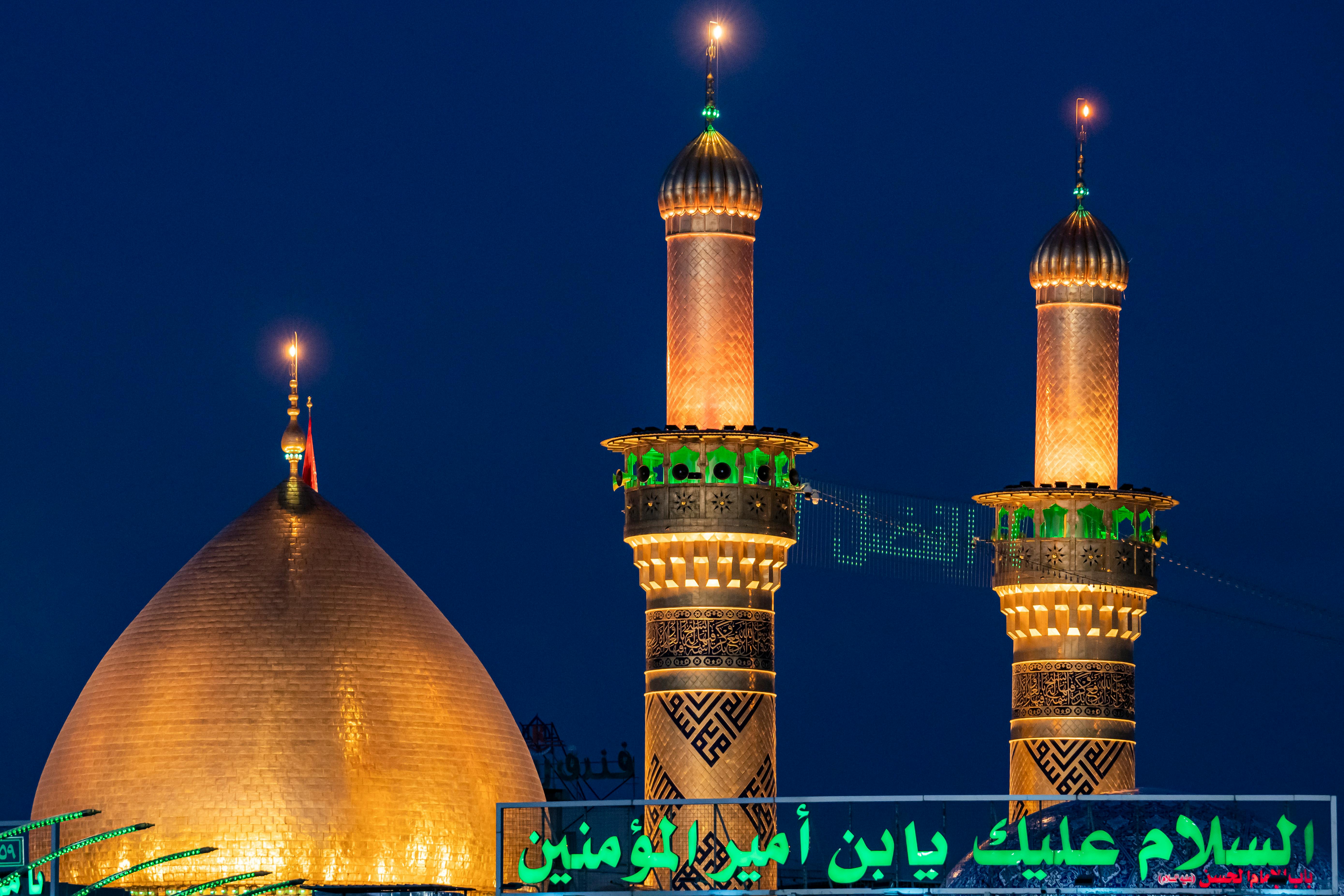
It was about 5-6 years ago. I was fortunate enough to participate in the historical arbaeen walk. The brutal and disproportionate war was still ongoing. Despite these conditions, we experienced the joy of visiting Allah’s holy servants.
In Iraq, there are tombs of many holy and historical figures, especially the descendants of Prophet Muhammad. Upon entering Iraq, tents were set up. Those who couldn’t afford accommodation could stay in these free tents.
Our group consisted of 3 buses. Due to the war conditions, we couldn’t go directly from Istanbul to Iraq. We had to enter through Iran. Iraq was devastated by the war and sanctions. Those who were well-off had left the country.
Hospitality of the Iraqi People
Despite the ongoing war in Iraq, our food and other needs were met by the local people. Not only us, but the basic services of 25-30 million visitors were provided free of charge. These free services were only valid for the visitation of Imam Hussein. Everything was complete for the visitation of another Islamic figure.
There is a tragic story behind this. We first arrived in Najaf by bus. We were walking towards the tomb of Imam Ali. “Why” might be spread wrongly? Because among “pieces,” Allah’s visitation is more acceptable.
An Englishman in Najaf, Iraq
During the historical arbaeen walk, something caught my and my friends’ attention. A young man, around 20-25 years old with spastic disabilities, was participating in the walk like us.
He was also collecting trash along the route to be helpful. Upon closer inspection, this young man looked exactly like an Englishman or American. He was fair-haired with blue eyes. That young man was living proof that people from all nations were present in these holy lands.
An Unexpected Moment

We continued our walk. Some young men were carrying banners. As far as I remember, after walking for about half an hour, we heard an explosion sound. We thought terrorists had detonated a bomb. We scattered in all directions. When we looked, an Iraqi young man was lying on the ground.
It turned out that the metal tip of the banner had caught on the low-hanging electrical wires. Due to this, the Iraqi young man was martyred there. After this incident, the historical arbaeen walk continued with elegies and chest-beating. There was a huge crowd.
They say that if your eyes fill with tears at the tomb, it means that your visit has been accepted by Allah. Thankfully, my eyes filled with tears at the tomb. While visiting those holy people, I thought about the pain they endured while fighting for knowledge, honor, and freedom. They were always subjected to the oppression of tyrannical rulers, and they were all martyred for this cause.
We couldn’t stay long at the tomb of Imam Ali al-Naqi (AS) in the city of Samarra, Iraq. We had to look from a distance, pray, and leave quickly. That place was said to be the most dangerous. One of the biggest goals of the terrorists was to eliminate the traces and tombs left from Islam.
Finally, we were back in the city of Najaf, where the tomb of Imam Ali is located. The final days were approaching. The 40th day of Imam Hussein’s martyrdom arrived, and a famous and unique walk, unparalleled in the world, began: the historical arbaeen walk. This was a kind of walk of rebellion against oppression.
islamicmedcoms.com/the historical arbaeen walk and my memories(2)
 Islamic Medicine Articles